The Psychology of Retention
Hi I am Deepshikha! The brains behind the "Reel Composer"
Prasanna likes to describe social media as a numbers game 🎯 a sequence of Bernoulli trials where posting at scale eventually forces luck to show up. And he’s not wrong.
But he’s only half right.
Volume gets you the lottery ticket 🎟️
Quality decides whether you actually get to keep the winnings: followers, trust, and conversions 💰
Because if you post 100 videos and all of them are just noise 🔊, you’re not building an audience. You’re just creating a very loud archive that nobody comes back to.
When we tried to make Prasanna’s Reel Composer strategy actually work, we had to redefine what “quality” means. Not cinematic perfection. Not 4K cameras or fancy color grading 🎬❌
For us, quality meant psychological stickiness 🧠✨
The kind that makes someone stop scrolling, stay watching, and remember you afterward.
So we broke high-performing short-form videos down into specific, engineerable components, things you can design for, not hope for.
The Mechanics of the Hook (0-3 Seconds)
The algorithm doesn’t watch your video 👀
It watches people watching your video.
Those first three seconds decide everything. If you lose attention there, the rest of your “great content” might as well not exist.
The Information Gap
Curiosity is a mental itch. If you want someone to stop scrolling, you need to open a loop their brain wants to close.
- Bad hook: “Today I will explain Merkle Trees.”
(Statement of fact. No tension.) - Good hook: “This is the mathematical reason Git never forgets your code.”
(Instant gap: Wait… why?)
The Sensory Trio
High-performing hooks usually trigger at least one of these: the best trigger all three 💥
- Visual: Immediate movement. Static talking heads underperformed. Code typing itself, glitch effects, or sudden motion worked far better.
- Audio: A sharp sound: a keyboard tap, a whoosh, even a breath, cuts through muted feeds, each animation 😺 should be accompanied with a visual sound! 📢
- Narrative: Start inside the story.
“So the server crashed…” beats “Hey guys, welcome back…”
The 3-Split Format
The best edutainment videos follow a simple but rigid structure 🧱
And honestly, once you see it, you can’t unsee it.
Setup (The Promise)
The hook. The moment where you say just enough to make someone stop scrolling and think,
“Okay wait… what’s going on here?” 👀
The Meat (The Value)
This is where Prasanna’s animations really matter.
The brain processes visuals way faster than text 🧠⚡
So when you show a cache miss instead of explaining it in words, you’re doing the brain a favor.
Less effort. More clarity.
And when something suddenly feels easy to understand?
That little dopamine hit kicks in! people feel smart, and they stay ✨
Payoff (The Close)
You close the loop. Answer the question you opened.
Then ask for the smallest commitment possible: save, follow, comment 💾➡️
Now, personally? My taste in content shaped how I see this.
Some of my absolute favorites:
thebrowndaughter, gopali_, mridul_sharmaa, yashasvirajpoot11, my.story.animated, not_your_type_yt 💕
They’re not “educational creators” in the traditional sense, but they own retention.
They understand pacing, emotion, payoff ✨ even when the content feels effortless.
That’s where things got tricky.
When I started thinking about ed-tech content, the space felt… very male-dominated 😶
And I genuinely paused and thought... where are the women?
But the more I watched, the more I realized something important:
fundamentally, human psychology doesn’t change.
Men and women don’t retain information differently! it’s the wrapping that changes 🎁
The same structure works.
It just needs a different tone, rhythm, and emotional surface.
Creators like learnwithadithya, Varun Mayya, and Vaibhav Sisinty prove this perfectly.
They all use this exact split format:
hook → value → payoff ... just dressed differently.
So that’s what I told Prasanna to do.
Don’t reinvent the wheel.
Copy the format. Engineer it. Automate it.
To be fair, he did a lot right 😌
But yes, there are gaps.
No strong audio hook yet 🎧
No picture-in-picture when animations go full screen
Some moments where attention leaks instead of locking in
That said… I’m not a techie (not even remotely)
I don’t fully know the technical constraints of what he’s building 🤷♀️
So I’ll save the harsh critique.
For now, I’ll just say:
“You’re close. Very close.
But retention is ruthless and it notices everything.”
😌✨
Trust Signals: Face, Captions, Language
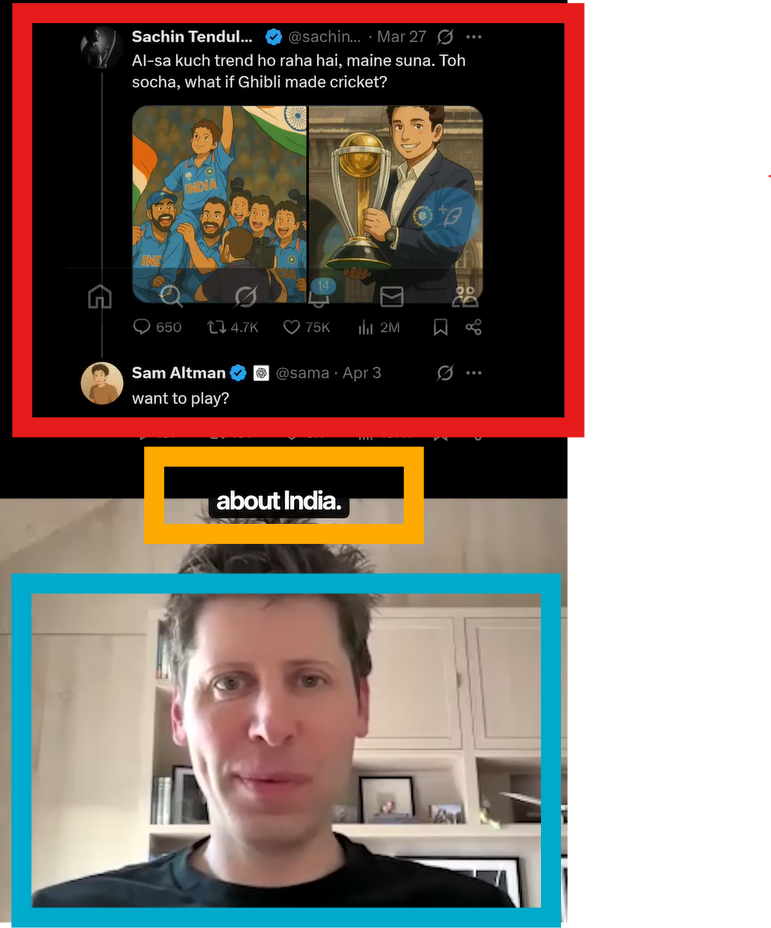
Content (or animation) = Retention
this twitter tweet is the content here which people will actually watch moving objects, highlighting things or a good animation flow will retain the audiences! Mostly in female centric content they themselves 💅🏻✨(go girlies) are the content and the credibility (face) so this 3 / Split is not needed. But if you explain something else you need to show the content and be present with your viewers!
Face = Credibility
Faceless channels can get views, but they rarely build trust. Seeing Prasanna’s face, even in a small frame next to the code, signals legitimacy. Humans trust humans 🤝
Captions = Retention
Most people watch on mute or in nosy environment or maybe at night! Captions aren’t optional.
Dynamic captions (highlighted keywords, motion) keep the eye moving and prevent passive scrolling 👀
Language Filters the Audience
He (Prasanna) was more comfortable speaking in Hindi 🗣️🇮🇳 since it’s his native language. I still suggested we go with English 🌍
The logic was simple 🧠
Anyone who codes already lives in English: docs, errors, Stack Overflow, everything 💻📚
Using any other language just limits the audience 🚧
Yes, it feels awkward at first 😅
Yes, it adds friction in the beginning ⏳
But it removes a much bigger ceiling later 🚀
He actually argued the opposite at first 🤝
His concern was that forcing English would slow him down and make it harder to put out videos consistently 📉📹
And honestly, that was a fair concern 👍
But this was one of those decisions where long-term leverage mattered more than short-term comfort 🎯
I made the final call ✋
He trusted it, went with it and looking back now, he doesn’t regret it at all 😌✨
Two Types of Content: Understanding ROI
From Prasanna’s 30-day sprint, we saw two clear types of “viral” content. Confusing them leads to burnout.
Type A: High Reach / Low Turnover (Dopamine Content)
- Broad appeal, instant emotion
- Comedy, shock, chaos
- Huge views, tiny conversions 📉
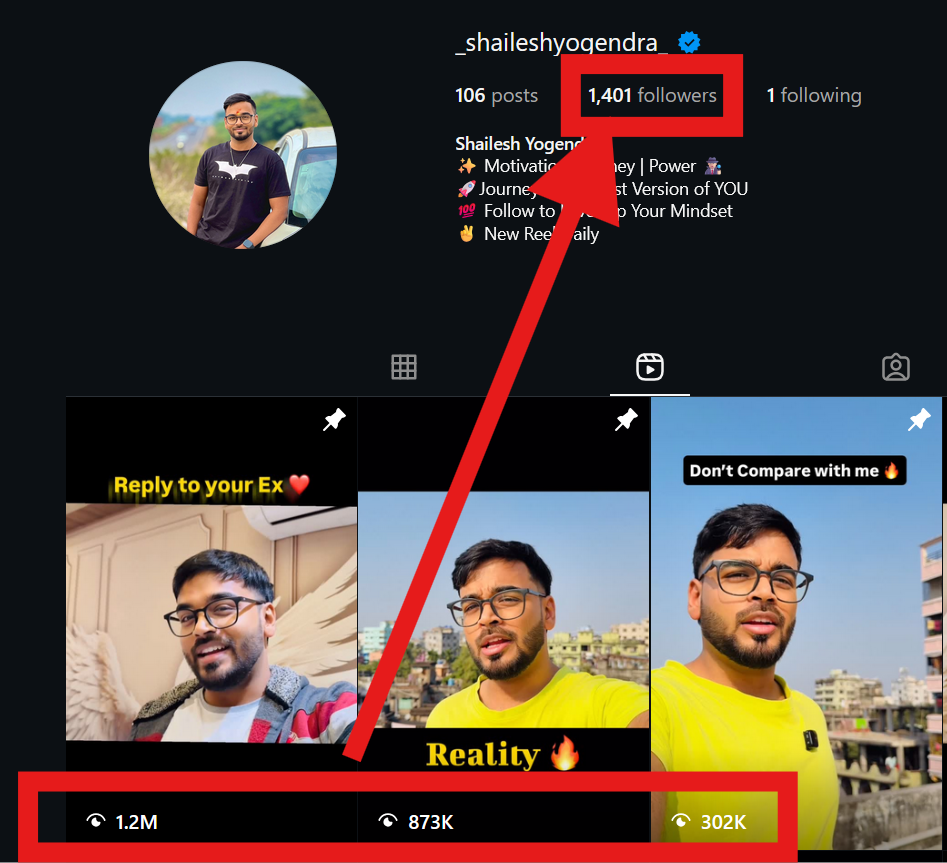
Example: Shailesh Yogendra
He's his close friend, he too started this experiment months back. he posts relentlessly and gets millions of views! many people follow a similar trend and have a massive reach! but viewers don’t trust them with decisions, careers, or money. They watch and leave.
Type B: Moderate Reach / High Conversion (Authority Content)
This is where Reel Composer shines ✨
- Niche topics
- High information density
- Solves a real problem
10k ~ 50k views, but 1 ~ 5% conversion! which is massive.
When someone watches system design content, they’re not bored-scrolling. They’re searching for answers. And when you provide them, they stay.
Case Study: The Merkle Tree Video
A 60-second breakdown of Merkle Trees: not an “easy” topic.
What it had:
- Hook: “How to find single key difference in 2 databases” (whatever that means 😆)
- Visuals: Animated 2 databases not in sync (auto-generated)
- Language: Technical, uncompromising
Results:
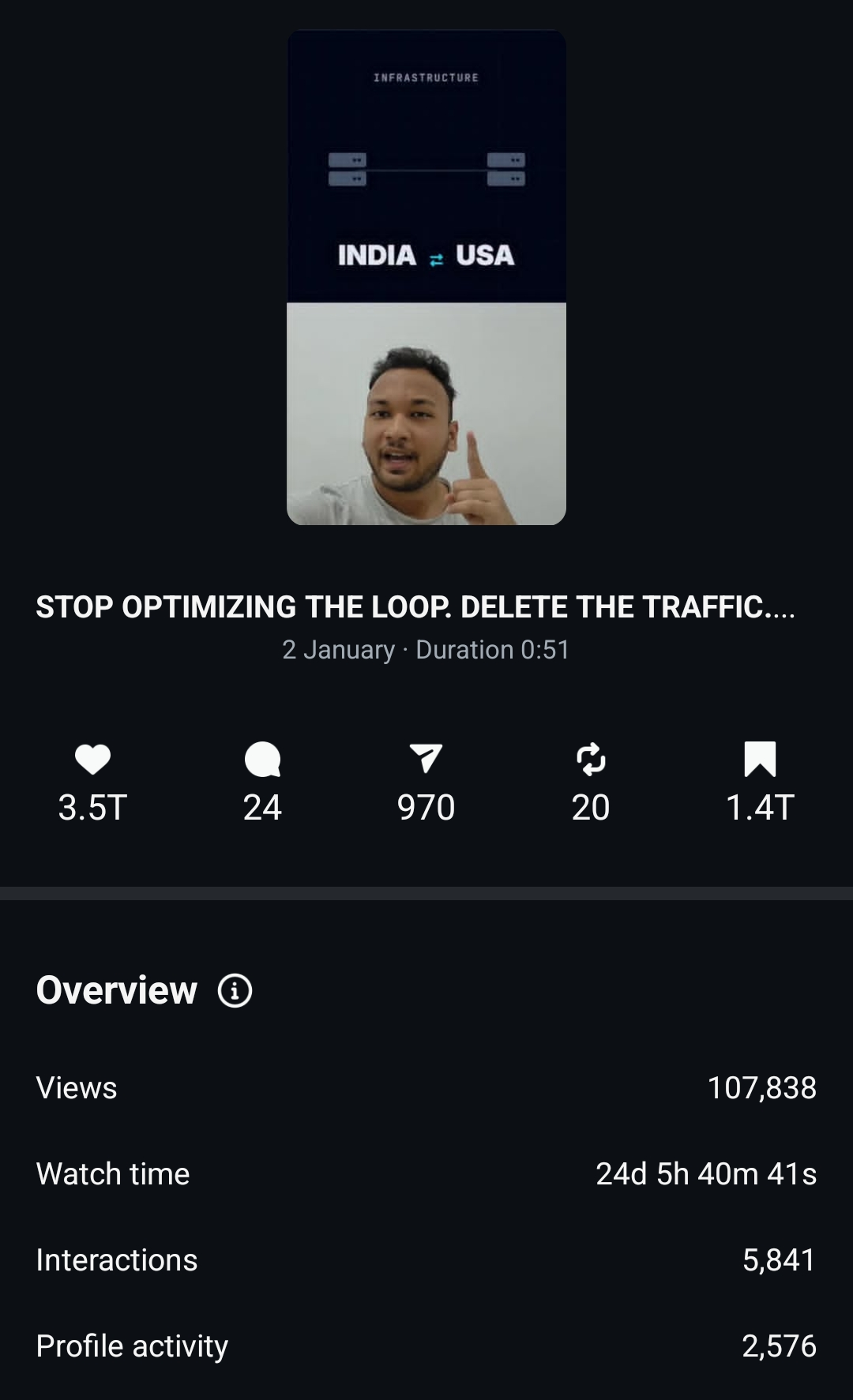
- ~107k views
- A sharp spike in engineers, CTOs, and founders following
- 2.5K follows from a single viral video!
This worked because it filtered people out.
The right audience recognized it instantly and stopped scrolling.
Final Takeaway
Prasanna didn’t grow from 450 to 16,000+ followers in 30 days by chasing viral trends.
He produced Type B content at Type A volume.
By automating visuals and structure with Reel Composer, he scaled authority, not noise.
So the better question isn’t
❌ “How do I get a million views?”
It’s
✅ “How do I get the right 10,000 people to stop scrolling?”
Start there. 💖